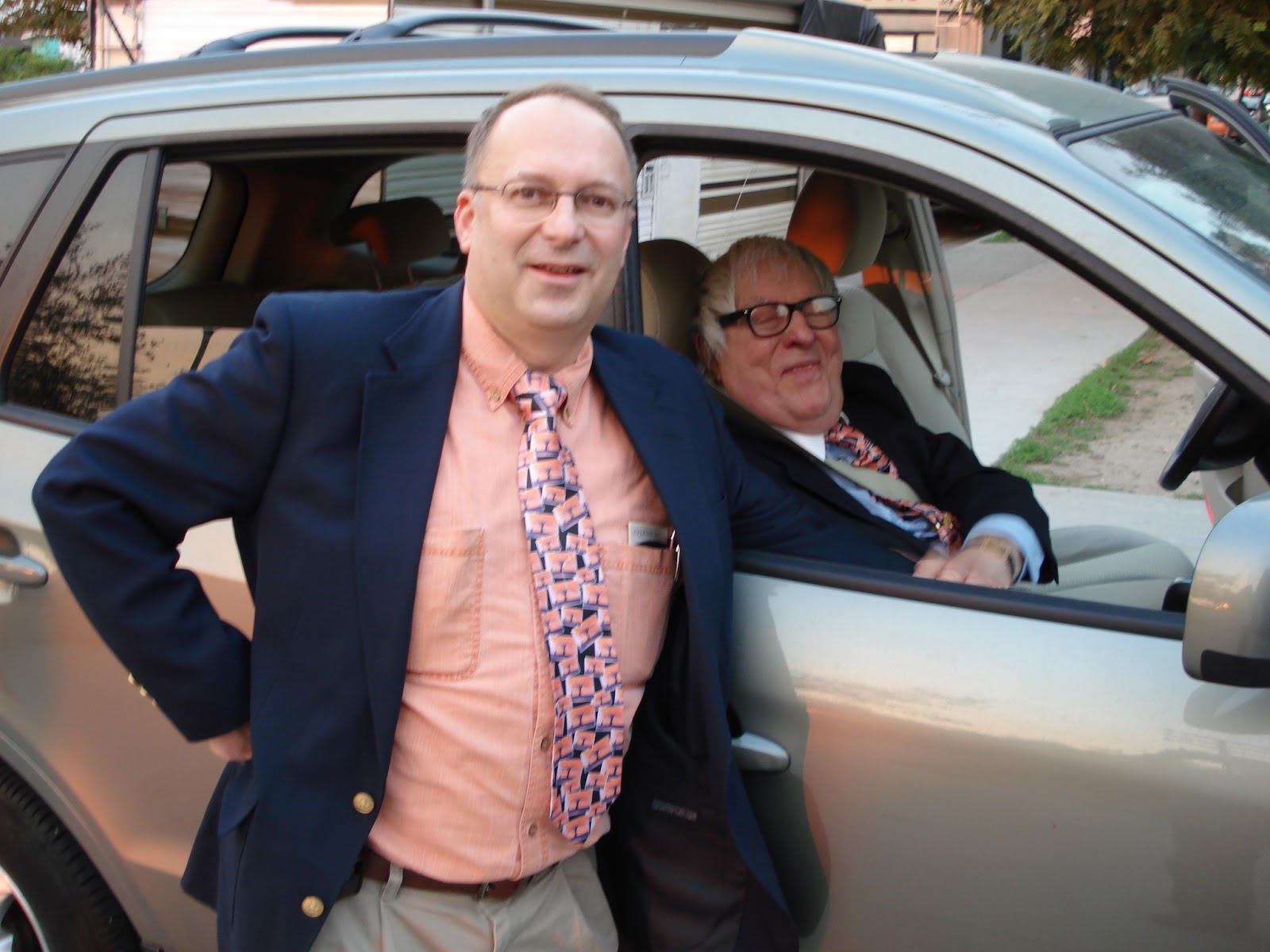
Showing posts with label Jonathan R. Eller. Show all posts

Wednesday, August 5, 2020

WITH BRADBURY BEYOND APOLLO A CLEAR-EYED AND PENETRATING BIO IS CONCLUDED


With the publication of Bradbury Beyond Apollo (University of Illinois Press), Jonathan R. Eller has completed his three-volume self-designated “biography of a mind” of the author of Fahrenheit 451, The Martian Chronicles, Something Wicked This Way Comes, Dandelion Wine, and hundreds of published short stories. Eller began with Becoming Ray Bradbury in 2011, followed that up with Ray Bradbury Unbound in 2014, and it has been six long years for this conclusion to reach us. Although the book’s publication date of August 22, 2020, the centenary of Bradbury’s birth, is so appropriate, it is easy to forgive Eller. 


The obvious question then is, was it worth the wait? I suppose each reader must answer that for themselves, but it was for me. I greatly admired the first volume for Eller’s insight into Bradbury’s early years and his growth as an artist of narrative prose, the experiences, influences, loves, needs, relationships, fears, and passions that shaped and matured the mind giving birth to Bradbury’s unique creativity. In the second volume Eller detailed Bradbury’s creative world widening out to include film, theater, fine art and architecture, and the future of space exploration by man and machine. Eller’s documenting these activities, what they meant to Bradbury and how they affected him, confirmed a suspicion I have always held that Bradbury’s love and involvement in these areas might have diminished his time, energy, and efforts in practicing his true art of narrative prose. Bradbury Beyond Apollo continues from the second volume beginning after the first manned moon landing in 1969. Eller goes on to cover Bradbury’s essential—and valued—participation in what Eller calls “The Great Tale of space exploration.” Not as a scientist or engineer, of course, but as a visionary. The book concludes with Bradbury’s death in 2012 at ninety-one, more than a decade after a debilitating stroke, and some severe, if not total, loss of hearing and vision. It also chronicles Bradbury’s writing life as one of, again, eschewing a full concentration on new prose works for efforts to see his work metamorphosed into films, plays, and large scale theme-park-like presentations. Many of these efforts were unfulfilled or unsatisfactory. 


I have a particular affection for this third volume, as it includes the years I knew Bradbury as a colleague and friend from 1977 to the end of his life. Indeed, I come in as a minor character in Bradbury’s story when Eller writes about our work together on a film project (unfulfilled and unsatisfactory for us both) in 1982-83. And my organizing of a series of city-wide events celebrating Bradbury’s 90th birthday in 2010, Ray Bradbury Week in Los Angeles. But affection is not assessment, and in assessing this volume, I was struck not only by Eller’s compassionate if still objective eye on Bradbury but by just how fine a writer Eller is himself.


Despite Eller being an academic, despite being Chancellor's Professor of English; Director, Center for Ray Bradbury Studies; Senior Textual Editor, Institute for American Thought; General Editor, Collected Stories of Ray Bradbury; General Editor, The New Ray Bradbury Review; and ConsultingTextual Editor, Works of George Santayana (whew!) at Indiana University School of Liberal Arts—and despite a university press publishing the three volumes—none of the three read like academic texts. Nor do they read like a “popular biography” which might concentrate more on Bradbury the flesh and blood man, giving an exterior view of his activities both literary and personal. Rather, as I mentioned above, Eller writes with compassion in clear and often engrossing prose of the interior, creative mind of Bradbury, tracking him, in the three volumes, from young enthusiast for things of wonder—Mars, space adventures, literary treasures in a library, movies, music, and the spires of futuristic cities depicted in sci-fi illustrations—to his late in life energetic fashioning of new story collections combining stories past and recent, and the writing of possibly a new sub-genre: three autobiographical mystery novels exploring his early writing life. 


Why a compassionate eye? Because Eller has a deep understanding of the artist that Bradbury’s mind shaped, an artist with the inability to follow the standard, the form, the pattern, the rules, and the expected from the only venues for his writing early on—pulp magazines. (Or the integrity not to, assuming there is a difference). This led to a lifetime of creating unique works of prose poetry, using words like a sculptor might use clay to shape into stories what his imaginative instincts improvised. And, later, his ventures into the non-prose form of dramatic writing for both film and stage using this same method. This invariably led to conflicts with magazine editors, film, television, and theater producers and directors, and other collaborators necessary to take his work from his mind to some tangible form. The more distant from the prose Bradbury authored alone, the more authority the collaborators had, and the more frustrating, possibly infuriating, it could be for Bradbury when they were not—so to speak—on the same page with him. It is in the telling of these collaborations and Bradbury’s disappointments that Eller writes with compassion.


Is compassion warranted? After all, didn’t Bradbury know the job(s) was dangerous when he took it? He certainly didn’t when, in 1953, he took the Moby Dick screenwriting assignment from director John Huston, who he hero-worshiped. But shouldn’t the following six decades of many experiences in collaboration—starting with Huston’s bully tactics—have, “wised him up”?  Possibly. But Bradbury, as an artist, did not operate from mature wisdom, but from youthful, passionate loves. 


Eller writes, “In his mind it all came down to love, really; Bradbury paid the price of fame as all writers of magnitude must, but the effects were tempered by the simple admonition of literary love, a love that did not distinguish between the popular and the literary: ‘So I always wanted to be on the shelves, with my loves,’ he would later reflect in private conversation. ‘That’s different than being famous, isn’t it? I wanted to share the library dark with them. I wanted to go look up on the shelf and see the titles with their golden eyes—the numerals, the golden numerals, spelling my name with theirs. But that’s not fame, that’s love.’”


If Bradbury’s love had stayed with just the literary, he would have saved himself a lot of pain and frustration. But his capacity for passion was too big for just one manifestation of creativity. And so, just as he wanted to share library shelf space with writers he admired—from Verne, Wells, and Burroughs to Wolfe, Hemingway, and Fritzgerald—when given the opportunity he naturally wanted to share creative space with actors, filmmakers, musicians, fine artists and illustrators, architects, and even the space explorers he admired. And I’m sure he was pleased when they were pleased to share that space with him. Don’t we all want to be admired by people we admire?


Because of his own unique genius as a writer, easily recognized by other creative artists, Bradbury was able to share creative and intellectual space with the likes of, in alphabetical order, Buzz Aldrin, Bernard Berenson, George Cukor, Walt Disney, Kirk Douglas, Jose Feliciano, Federico Fellini, Mel Gibson, Jerry Goldsmith, Kathrine Hepburn, Charlton Heston, Alfred Hitchcock, Gene Kelly, Charles Laughton, Joe Mantegna, Jason Robards, Carl Sagan, Lalo Schifrin, and Orson Welles, among others. 


If Bradbury had not been consumed with these other passions and loves, what other fine works of narrative prose might he have written? Would there have been hundreds of more short stories? Would this master of the short story have conquered the long narrative form of the novel, which is almost universally acknowledged as not his strongest art? (And yet Fahrenheit 451 is one of the most read and influential novels of the 20th-Century). Who knows? Possibly Bradbury had said all he really wanted to say in prose, published and unpublished, by 1970. Possibly taking this output and adapting them to other forms he loved was what was going to fuel his creative fires from that point onward. But that meant collaborating, taking on creative partners. The thing about prose artists—not just workers in the field, but artists—is that, except in very rare instances, it is a lonely, individual art form. Such an artist is the sole author, thus the authority, and anyone who is truly good at it usually is most comfortable being rather autocratic in that authority. 


It is not that Bradbury didn’t want to collaborate, it just was not, I believe, a natural fit for him, as much as he might have wanted it to be. Given that, his frustrations are understandable. Certainly, Eller understands them and rightly conveys his compassion for the man. Not that there weren’t some rewarding collaborations, such as The Ray Bradbury Theater on cable. But these were ones where Bradbury retained a large measure of the authority. 


Eller also understands that for a man like Bradbury, a man of passions and loves, despite the frustrations, great joy can be experienced in pursuing them. Anyone who knew Bradbury knows he was a man of great joy. Anyone who saw him lecture knew he could effortlessly communicate, even transfer that joy to the audience, big or small—truly his most successful art after narrative prose—which must have heightened Bradbury’s own joy.


So as much as I and Bradbury’s legion of devoted readers of his stories and novels would have liked much more, who the hell would have wanted to deny Ray Bradbury his joys? 


Eller’s achievement in Bradbury Beyond Apollo and his two previous volumes will stand for years as the most penetrating view into the creative fire that was Bradbury’s mind and talent. It is a work of clear-eyed scholarship and, it must be said, love. In writing about a man and artist for whom love was all-important, how could one successfully do so otherwise?


Bradbury Beyond Apollo and the first two volumes can be purchased on Amazon and other online bookstores in both print and digital formats.


You will find Eller’s Amazon Author’s Page HERE


You can read my 2011 review of Becoming Ray Bradbury HERE.

You can read my 2014 review of Ray Bradbury Unbound HERE.

You can check out my novels on the MY BOOKS page of this blog, as well as my book of essays, Searching for Ray Bradbury: Writings about the Writer and the Man. 


Wednesday, February 12, 2020

A CONNECTION WITH RAY BRADBURY I NEVER KNEW I HAD


Most of my friends and some of my readers know that the writings of Ray Bradbury were an early influence on me as a writer; that the man Ray Bradbury became a colleague in the film industry; that the author Ray Bradbury was wonderfully generous toward me—and a plethora of other writers—and that during his 90th year I was able to arrange a week-long series of events in Los Angeles to honor him during his birthday week.


All of which I, of course, hold dear. But now, in Ray’s 100th year, I have discovered a connection with Ray that I was never aware of, and couldn’t even have imagined.

That discovery is due to the scholarship of Jonathan R. Eller, Chancellor's Professor of English and Director of the Center for Ray Bradbury Studies at the Indiana University School of Liberal Arts. 

Jon is also the author of the best biography of Ray that I know of. In three volumes—Becoming Ray Bradbury, Ray Bradbury Unbound, and to be released later this year, Bradbury Beyond Apollo—Jon has written, as he calls it, “a biography of the mind.” It is certainly not a misnomer. Jon gets to the essence of Ray as a creative mind producing unique prose fiction of a high order. If you want to understand Bradbury the author you must read these books.


But let us get to the discovery. Recently, in preparing to be on the SOMETHING WONDERFUL THIS WAY CAME: 100 YEARS OF RAY BRADBURY panel at the 53rd California International Antiquarian Book Fair in Pasadena I contacted Jon for some information on Ray’s feeling about the “science fiction writer” label he lived with, not always happily so. Jon got back to me and told me a story that will be in Bradbury Beyond Apollo about a short poem Ray wrote in 1971 that gave some indication of what writer designation Ray preferred. At least at that moment. 

I won’t tell you that whole story, as I encourage you all to read it when Bradbury Beyond Apollo is published. But I do want to mention the details that were pertinent to my discovery. 

In 1971 Ray had a speaking engagement at Citrus College in Glendora, California. Although at the time it was considered to be in Azusa-Glendora as it sat between those two cities.

The night before the engagement Ray wrote the short poem mentioned above, which I think we can assume he read to the audience during his speech as it was later published in the June 4, 1971 issue of the Citrus College Clarion. 

Those are the bare facts. But what’s the connection to me?

I grew up in Azusa. I attended Citrus College, graduating in early 1970.

I wrote a weekly column for the Citrus College Clarion.

The place that I’m pretty sure Ray would have spoken at on campus was the recently built performing arts center, now known as the Haugh Performing Arts Center.


I was at the groundbreaking for that performing arts center a few years before.

While I was at the groundbreaking for the performing arts center a mob of students was at the firepit in front of the student center putting to the flame stacks of that day’s issue of the Citrus College Clarion.

The mob of students was burning stacks of that day’s issue of the Citrus College Clarion because of a column I wrote.

It was a column of satire purporting to be the verbatim account of a meeting of the White Backlashers Union in which the members discussed ways to take care of the “blacks” problem in America. What they came up with were not, shall we say, nice ways. I was, of course, mocking crude, ignorant, hateful racism.

It was not the first time irony had been misunderstood (right, Dean Swift?). 

The students, especially those in the Black Students Union, several of whom were my friends, took the piece a bit too literally, assuming I was putting out serious solutions to something I did not see as a problem at all.
Part of the misunderstanding may have come not so much from my writing as from the headline to the column which was, I believe, THE WBU, THE BSU, YOU AND I. I did not write the headline, as no journalist does. And I did not mention the Black Students Union (BSU) in the piece.

Nevertheless, despite offense not intended; offense was taken, mob psychology took over, and my words on paper suffered the fate of being exposed to 451 degrees Fahrenheit.


I was gobsmacked (lovely word, that) when I learned all this just a week or so ago.

I now feel a wholly different kind of connection with Ray. A connection I’m not sure I can put into words. Which is ironic on several levels.

But I can feel it. 

And feel it I do. Deeply.

================================================

You can check out and purchase Jon Ellers’s books on Ray Bradbury on Amazon.

You might also want to check out the Center for Ray Bradbury Studies and the wonderful being done there under Jon’s leadership.

You can take a gander at my novels on the MY BOOKS page on this blog or on my Author’s Page on Amazon where you can also, of course, purchase.

And may I also recommend my short book of essays, Searching for Ray Bradbury: Writings about the Writer and the Man.


Friday, April 22, 2011

LONDON TO LOS ANGELES, DICKENS TO BRADBURY: A TALE OF TWO SIGNS

A VERSION OF THIS ESSAY IS INCLUDED IN MY NEW BOOK, SEARCHING FOR RAY BRADBURY, NOW AVAILABLE  FROM AMAZON.COM


On my first trip to London my plane landed at Heathrow in the late afternoon. By the time the classic black London cab had taken me from the airport to where I was staying — animator Richard Williams’s flat in Belsize Park — it was dusk. Richard was in Los Angeles working at his studio there and he had graciously offered me the use of his London home. 


Richard Williams's home in London

So I was on my own in making my way up to his second floor flat (on what we in America would call the third floor). This I did by dragging my over packed and heavy bags up the narrow stairwell in total darkness, as the lights seemed to be out and there were no windows to let in outside illumination, not that there was much of that in any case. This dark situation also existed on the second floor, and I had to feel my way along the walls to find that there were three doors to three flats on the floor. Three doors to choose from, and I could not see which was flat A or B or C. Not being a smoker, I did not even have a match or lighter to illuminate myself out of the potentially embarrassing situation of sticking Richard’s key into the wrong door lock. After a moment of panic and a few moments of scratching my head I came up with the bright idea of taking a Braille-like approach and feel for the letters. This, of course, was only going to work if the letters were raised metal attached to the doors, and not flat printed jobs or, worse, painted onto the doors. Fortunately, raised metal they were. I got the key into the lock, opened the door and was greeted by light streaming through the front, street-facing windows from a large street lamp just outside. I greeted it right back. 

A few minutes after arriving, as I was unpacking, there was a knock on the door, which probably made me jump. With caution I opened the door and there stood a man from one of London’s utility companies standing in the wonderful illumination of incandescent light. I could see the doors to the other two flats quite well now and assumed that the light in the hallway had just come back on. The utility man was there to check something in the flat. I asked him in, shutting the door behind him, and had a pleasant chat with him while he was doing whatever he needed to do. When he was done I saw him out, opening the door to a blackness only slightly abated by the light from Richard’s flat. 

I apologized to the utility man, saying I guessed they were having problems with a circuit. He looked at me in that way certain Brits like to look at certain Americans — the dumb ones — and reached over to a button on the wall I had not noticed before, and hit it with a “Let there be light” flourish. And there was light. It filled the hallway and the stairwell. “It’s on a timer, Mate,” he said as he dashed for the stairs. I stood there for a moment and, sure enough, as I heard the door to the street open and close, the lights turned off and I was again in the dark. 

I was not happy to have had my lack of international travel — this was my first substantial trip anywhere — and my naïveté pointed out, sparking some worry and concern about the evening ahead. 

I was scheduled to have dinner with Clare Kitson, a programmer at the National Film Theater. She wanted to take me to a restaurant in Soho and feed me whitebait, which I had absolutely no idea what that was. She also expected me to make it there by subway, which she, of course, called “the Tube.” “Catch the Tube at Chalk Farm and take it to Tottenham Court Road,” she said casually as if she was talking to someone who had a familiarity with cities as large as London, had ridden subways on his mother’s knee, and wasn’t intimidated by dark stairwells. I decided to keep her in the dark, maintaining a pose of sophistication I copied from James Bond films. I showered, I dressed, I ventured forth — and, following instructions Clare had given me, found the Chalk Farm tube station with no trouble. 


That — and the feel of London I got just walking to the station — boosted my confidence. Still, I needed to descend undergro und and deal with buying a ticket, finding the right train, getting on it and not getting mugged. All of which I did quite well — including not getting mugged, thank goodness. I had left quite early as I had no idea how far Belsize Park was from Soho. As I studied the convenient map of the tube line in the interior of the train, 

and carefully noted each station as we came into them, I soon knew that I was going to be at least one hour early. I made a quick, impulsive decision (you know, like James Bond might do) and got off the train at Goodge Street, the stop before Tottenham Court Road. I was determine to explore the unknown and maybe rub some naïvety off in the process. Emerging out of the tube station into a beautiful spring evening I started walking down Wigmore Street, trying not to look awed that I was in this city that had figured into many of my aspirations. Muggers, you see, look for people who look awed, so don’t. On a trip to a large unknown city, the naïve should always strive to look like the native. 

I soon found myself in a section called Marylebone and I turned a corner, walked some more and soon I was standing in front of St. Marylebone Parish Church. I am not that fond of churches, but I am of history, and this looked like an old church that must have figured into some history. 
St. Marylebone Parish Church today

St. Marylebone Parish Church in the 19th Century


Then I saw a sign, discreetly posted in the church yard, that informed me that this church, the very church I was standing in front of, served as the model for the church in the baptism scene in Dombey and Son by Charles Dickens. 


The great thing about Great Cities is that they are great! My first night in London, a reader, a budding cultural snob, naïve and intimidated but so wanting to be knowing and sophisticated, and I suddenly and delightfully come face-to-face with history and literature and the history of literature. It was a great moment, a floating out of one’s skin moment, a merging of the past with the present moment, making them things to be embraced. Life suddenly seemed reasonable and rational and well worth living. 

An experience like this could rarely, if ever, happen to an out-of-town visitor to Los Angeles. Not that we don’t have a subway, we now do, and not that visitors don’t use it. I once ran into a couple from Germany popping up out of the North Hollywood station looking to find out how far it was to walk to the Chinese Theater. Los Angeles does have a history, but not one of long duration or one that has entered the minds of out-of-towners (or most Angelenos, for that matter). And as there is a Literary London, there is a Literary Los Angeles, but on a scale somewhat akin to the scale weighing the difference between London’s history and L.A.’s. A check with Wikipedia will give you this: 

Los Angeles's literary history includes legendary authors like Raymond Chandler, whose hard-boiled detective stories were set in pre-war and immediate post-war L.A. Ross Macdonald carried on the Chandler tradition into the 1950s, and in the 1960s and 1970s blended it with themes of classical tragedy. Walter Mosley, James Ellroy and Joseph Hansen are among the local successors to Chandler. Nathaniel West's book, The Day of the Locust, depicted a raw side to the Hollywood dream. Ray Bradbury wrote science fiction after moving to the city in 1934. Actress Carrie Fisher has found success as a novelist. The best known local poet was Charles Bukowski, who mostly lived in Hollywood but in the later part of his life lived in San Pedro. Tens of thousands of screenplays have been written by L.A. city residents, and the movie business has attracted many authors, including F. Scott Fitzgerald, Aldous Huxley, Tennessee Williams, Evelyn Waugh, and William Faulkner. 

How Wikipedia missed Helen Hunt Jackson's influential 1884 novel about Los Angeles's mission era, Ramona, I have no idea. 


Although it is not true that people in Los Angeles, whether native or naïve, do not walk (they just do not walk much), when they do they are not likely to suddenly come upon a sign pointing to some literary fact, delight or point of historical interest.

I, however, have found one. 

My daughter, Miranda, and I were in Venice (not, unfortunately, the one in Italy) a while back looking for a spot — a square, a street, a circle — that might be a good place to lobby being officially named after Ray Bradbury, once a resident of this Los Angeles beach community. We were looking for the two addresses Ray had lived at: One, 670 South Venice Boulevard where Ray moved to as a young man in his twenties when his father rented a house next to a small powerhouse from the utility company he worked for, the other, 33 South Venice Boulevard, where he and his bride, Maggie, lived. We had no idea if the original houses still existed or what might now be at those addresses if they didn’t. A 7-11 minimart perhaps, or a gas station, or a legal medical marijuana dispensary? 

If you have read Ray’s writing you know he is an honestly sentimental writer, and if you know Ray you know he is an honestly sentimental man. These houses, long after he had moved from them, maintained a hold on him, as has the small powerhouse at 660 Venice Boulevard, which he could see out of the window of 670’s garage where he had set up a writing space in a corner. This is where he wrote most of the stories that became The Martian Chronicles. Ray is a man of metaphors, possibly the man of metaphors, and this powerhouse, surging, quite naturally, with power, became a metaphor for his own creative power, indeed, the metaphorical source of that power as he sat looking through the window to the brick building, imagining the power within and imagining it flowing into him to help him imagine Martians. Later on in life, whenever Ray was feeling reflective, often during those passages of life we cannot avoid, he would have his driver take him by “the old house” and the powerhouse. It must have been great to view them, to smell their breath, the scent of his youthful creative life, and take in the passage of time in one gulp, appreciating the whole even if parts were less than desirable. 

Miranda and I found that 670 no longer exists. Not the building, not the address. It has been subsumed by 660. However there is a sign! Indeed, there is a plaque. 


It was a bit confusing. The plaque reads that Ray, “...lived in this house...,” but the structure it was on — a modern brick building — was certainly not a house, especially one that Ray would have moved into in 1947. 660, the powerhouse, was still standing, but was now being put to a far different use. Both buildings were now connected by a one story concrete and glass building. It was not a 7-11 minimart, or a gas station, or a legal medical marijuana dispensary. I was delighted to find that it was an art gallery, L&M Arts, the L.A. branch of a well-known New York gallery. 

L&M Arts - you can just see the plaque on the modern building as a square just above the line of the fence


I walked into the gallery and asked at the reception desk about the plaque. They said that it had been on the old clapboard house they tore down to build the annex to the main gallery formed out of the shell of the powerhouse. They believed the owners of the gallery placed the plaque on the new building. 

The plaque can be seen just above the line of the fence

Where Ray's house had stood


Very Los Angeles — the tearing down of the old to build the new. Not that this house had any great architectural significance — and buildings of architectural significance have been torn down in Los Angeles — but it had that old standby, sentimental significance to a man, as well as deep literary significance to a legion of readers who love him. It was deeply satisfying to know that the place where Ray’s house had stood is now as dedicated to art as Ray had, in the same location, been dedicated to his art, and that that location and it’s literary history is marked for passersby to see. Of course, it is on a wide Boulevard traveled rarely on foot and so not likely to be a pleasant surprise to a city wanderer, but this being Los Angeles, that may be the best that could be expected, and if the owners of the gallery had not had the good sense to remount the plaque, we would not even have that. 

Where, though, did the plaque come from? I hoped to find out when I went to visit Ray, assuming he might very well be aware of the gallery and the plaque and the history of both. 

I was very fortunate when I went to Ray’s to find also visiting, Jonathan R. Eller, Professor of English and Co-founder of The Center for Ray Bradbury Studies at the Indiana University School of Liberal Arts. Jon will publish two important books this year, one being Becoming Ray Bradbury (the University of Illinois Press), which covers Ray's early career through 1953. He’s also working on a sequel volume, to be titled The World of Ray Bradbury, which will cover the middle years of Ray's career through the mid-1980s. The second book, of which he is the Textual Editor, will be The Collected Stories of Ray Bradbury, a unique volume of Ray’s stories in the chronological order in which they were written and including, I believe, recovered text from the pulp-published stories that had been edited, plus different versions of stories reflecting changes Ray made throughout the years. 

Ray was delighted to see that the plaque had survived the demolition of the house, and, more important I think, that the powerhouse, that powerful brick metaphor, still stood — and that it all was now a place of and for art. 

Jon filled in some gaps: 

The plaque had been put up by some friends of Ray’s (listed on the plaque), at their expense in 2005. In 2007 the then current owner of the house put it up for sale, but no one knew the approaching fate of the house. 


When it became known that the house had been sold, Jon, on one of his visits to L.A., took Ray and a couple of his friends and rushed to the house and found it empty with a locked fence around it. The powerhouse was in the same condition. They could get no information on what the plans were for the structures, but they feared they would be torn down. Becoming a literary commando, Jon jumped the fence (along with Jason Marchi, the original sponsor of the plaque, and a long-time Bradbury bibliographer, Donn Albright) and took exterior and interior photos (see below) to make a possibly last document of the structures. Sadly, they found that the plaque was missing. 

The powerhouse as Jon and Ray had found it, It had recently housed a printing business. Photo courtesy of Jon Eller  
The empty interior of the powerhouse. Photo courtesy of Jon Eller  

The house Ray moved to with his parents and the garage where he had his workspace. Photo courtesy of Jon Eller  
The interior of the garage. The lines in the floor that still demarcated the 9 x 9 wood-framed walls that set off Ray's office from 1942 to 1947. That small work area was in place when the Bradbury family took occupancy in March 1942. Photo courtesy of Jon Eller


A wider view. Photo courtesy of Jon Eller

Jon Eller at the front door holding an earlier doorplate. Photo courtesy of Jon Eller

Jon with Ray looking at his old home for the last time that evening in October 2007. Photo courtesy of Jon Eller


Later Ray's friends found out that the house had indeed been demolished. No one wanted to tell Ray. Would you? But one day, after a visit to the wife of a good friend who had just died, one of those sad passages of life, Ray told his driver to take him by the “old house.” There he discovered the house gone, and although the powerhouse was still standing, Ray feared that it too would be destroyed. Sadness upon sadness. 

That is all that Ray, Jon, Ray’s friends and family knew until I came with the report of what had happen to the house, to the plaque, to the powerhouse. 

I have never in my life been such a happy messenger.